Priory of St Brendan, Lady chapel · Kilmorack
Compline
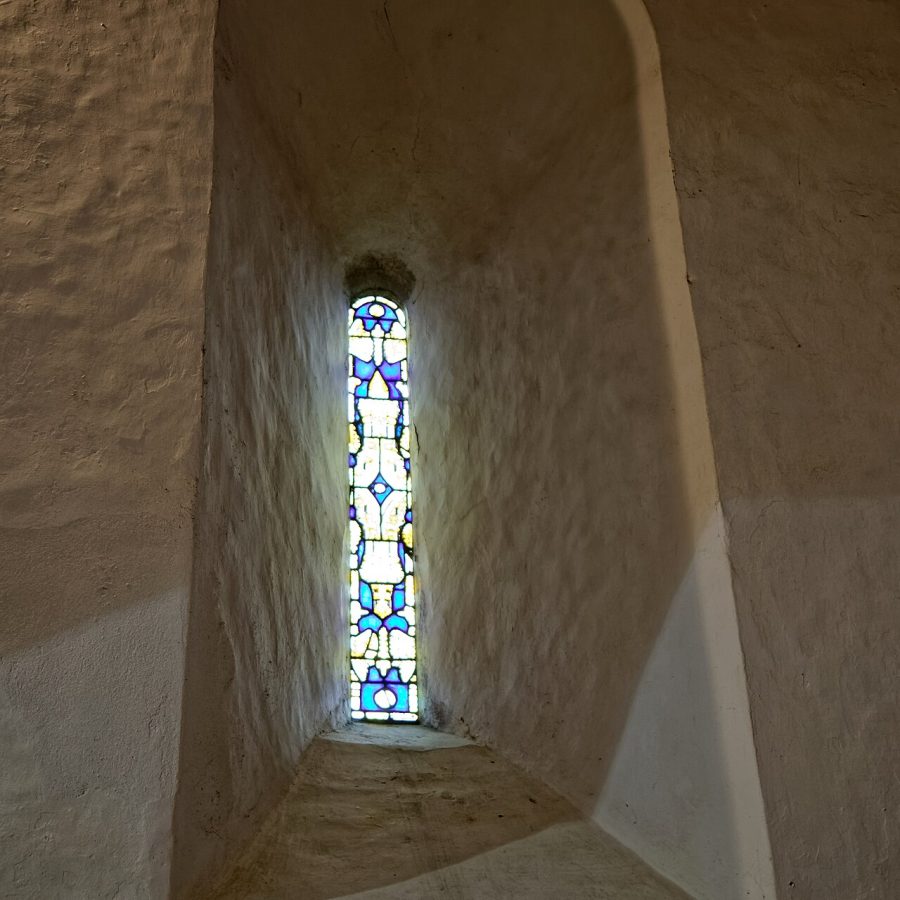
A Lady chapel window designed for candlelight and not for daylight — the first window we have made to be looked at after dark.
Completed2025
Lights2 lights
Panels14 panels
Glazed area5.3 m²
GlassLamberts — deep blues, one gold pink
Came9.5 mm H
Firings41
JobNew window
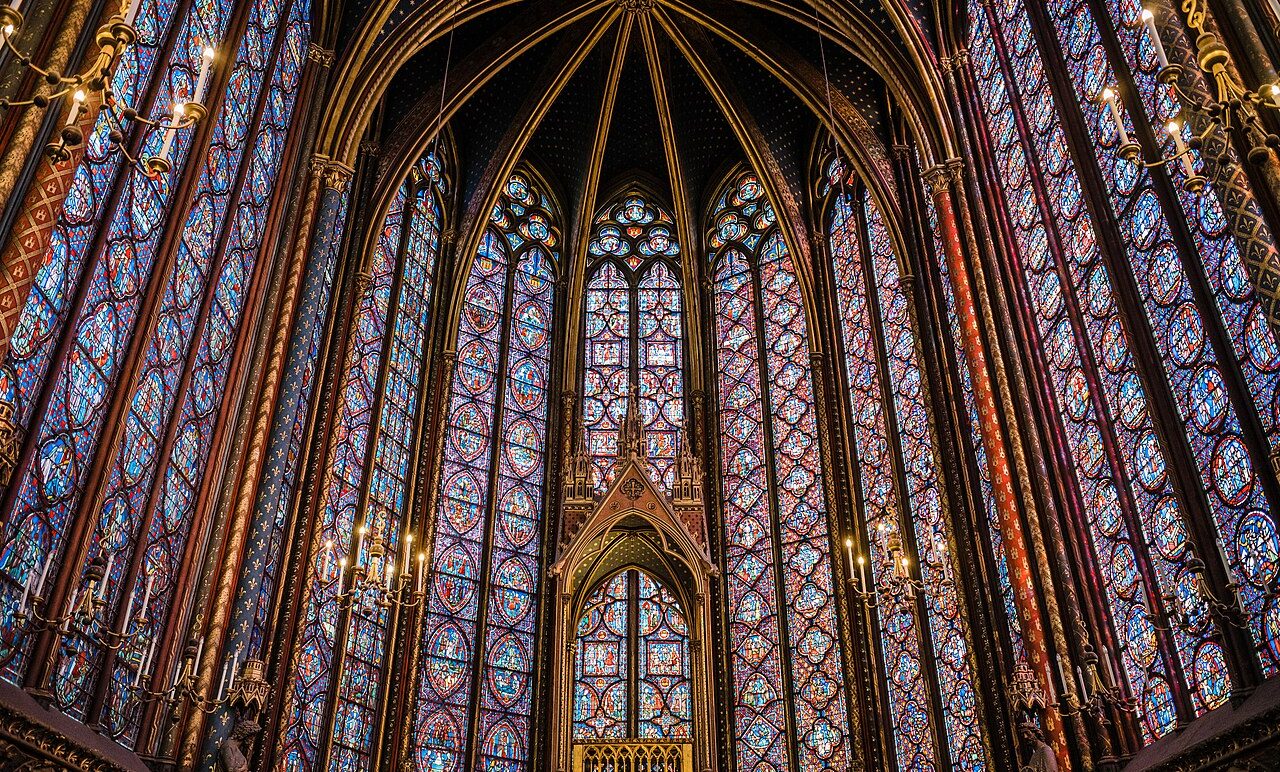
The window
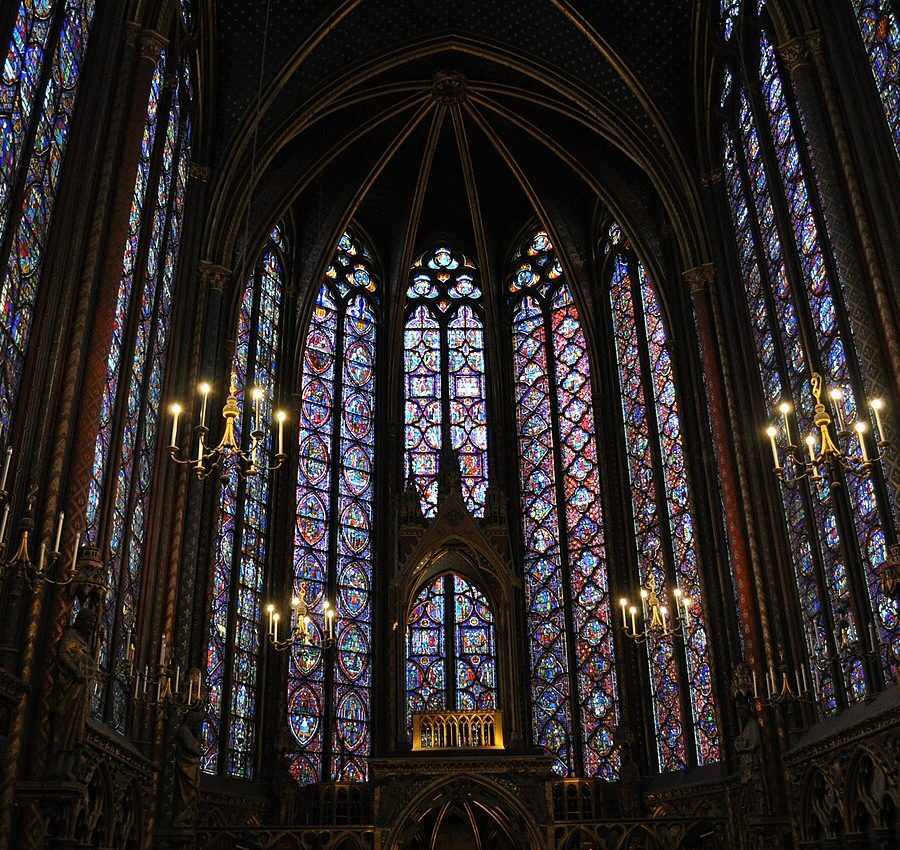
The community says compline at nine. In midwinter that is four hours after the light has gone, and for most of the year the window that dominates their evening office is a black rectangle. This is true of nearly every church window ever made and almost nobody designs for it.
We hung the working panels in the studio and worked on them under two candles at the distance the stalls are from the window. Everything was decided that way and only afterwards checked in daylight, which is the reverse of how we have made every other window in this book.
What candlelight does
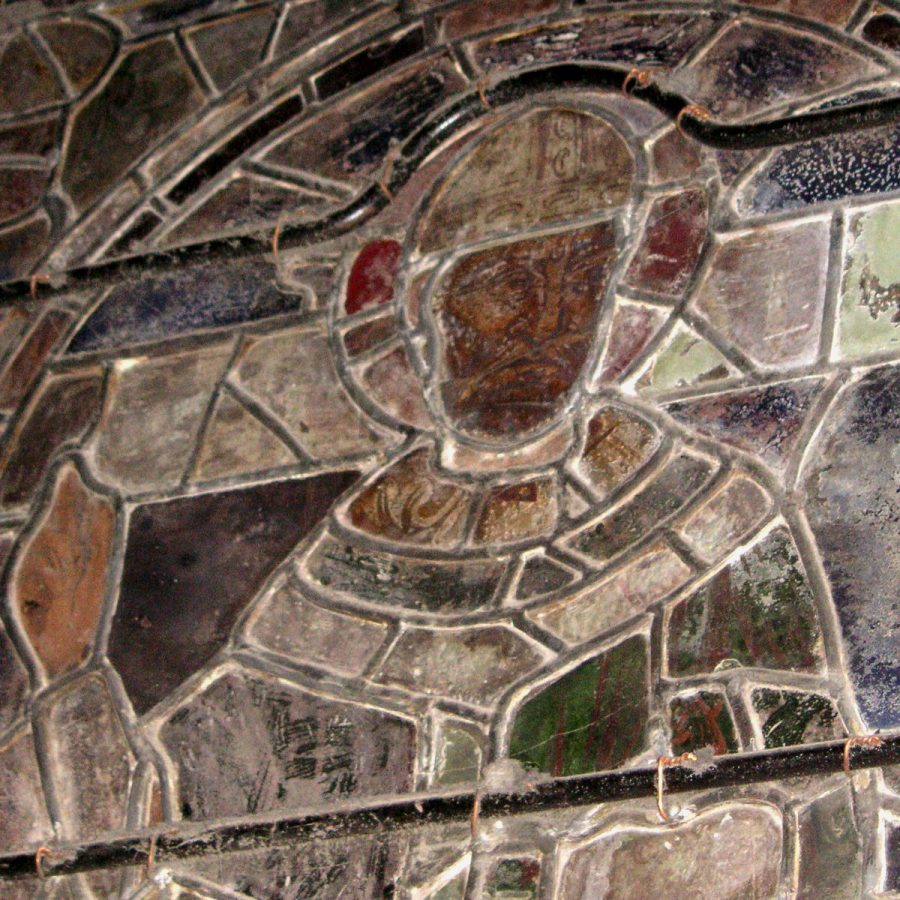
At around forty lux, with the light source in the room rather than behind the glass, a window stops transmitting and starts reflecting. Deep blues go almost black and read as depth. Anything with a matt on it goes dead. What survives is glass with an uneven surface — seedy, reamy, anything with texture that can catch a moving flame — and paint applied as a stipple rather than a wash.
Gold pink
Two small pieces in panel 5, made with colloidal gold, and they cost more than everything else in the window put together. In daylight they are an unremarkable dusty rose. Under candles they are the only thing in the room that looks lit from inside.
Panel by panel
Whole
Designed under candlelight on the bench, then checked in daylight — the opposite of the usual order.
Panel 5
Gold pink. Two pieces, 40 mm across. The most expensive glass in the studio, by a wide margin.
Panel 9
Almost black in daylight. Comes alive at about 40 lux and not before.
Panel 12
Painted with a stipple rather than a matt, so candlelight catches unevenly across it.
Elsewhere