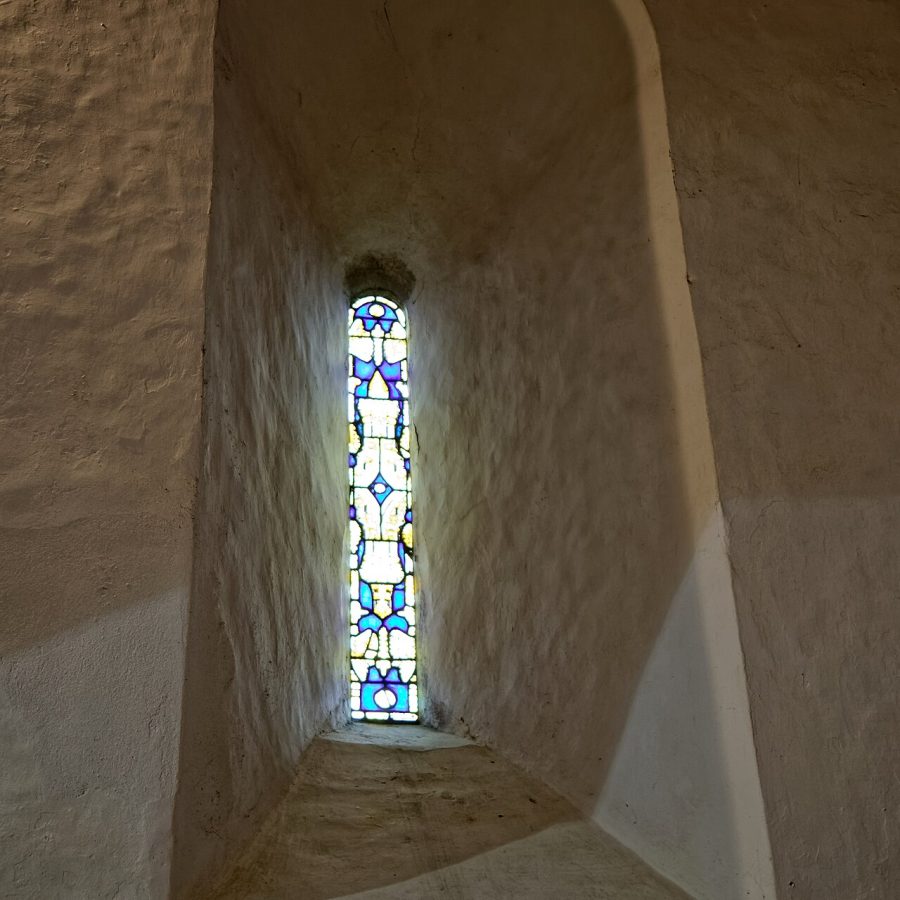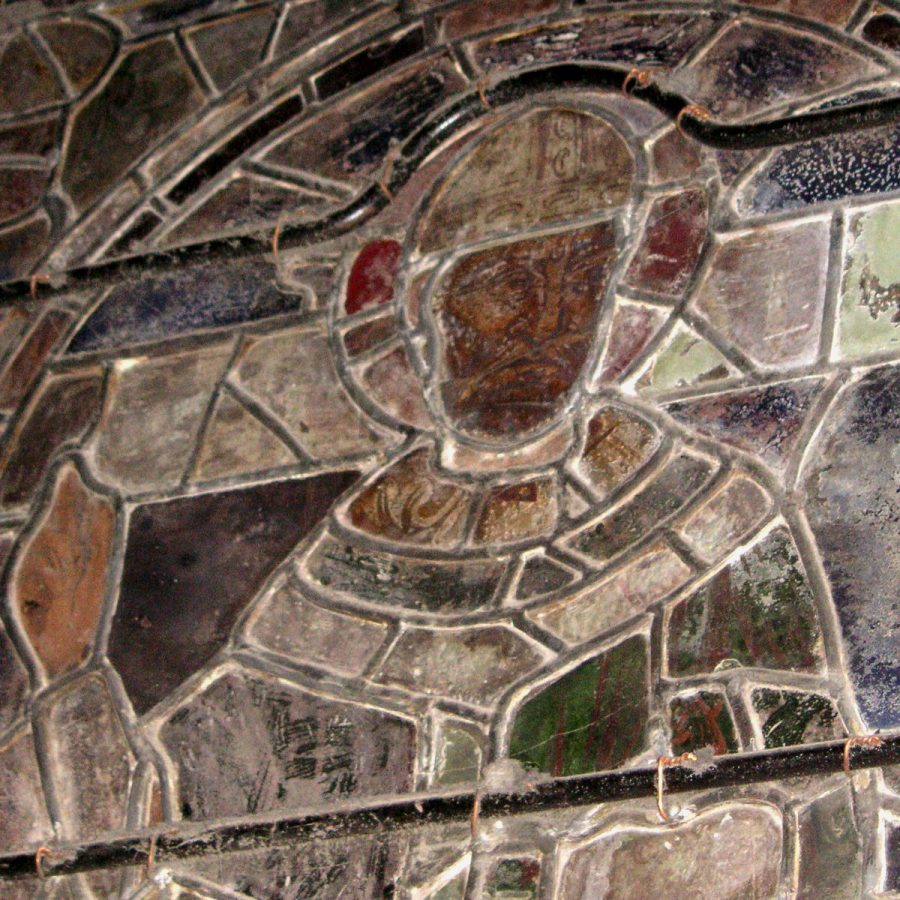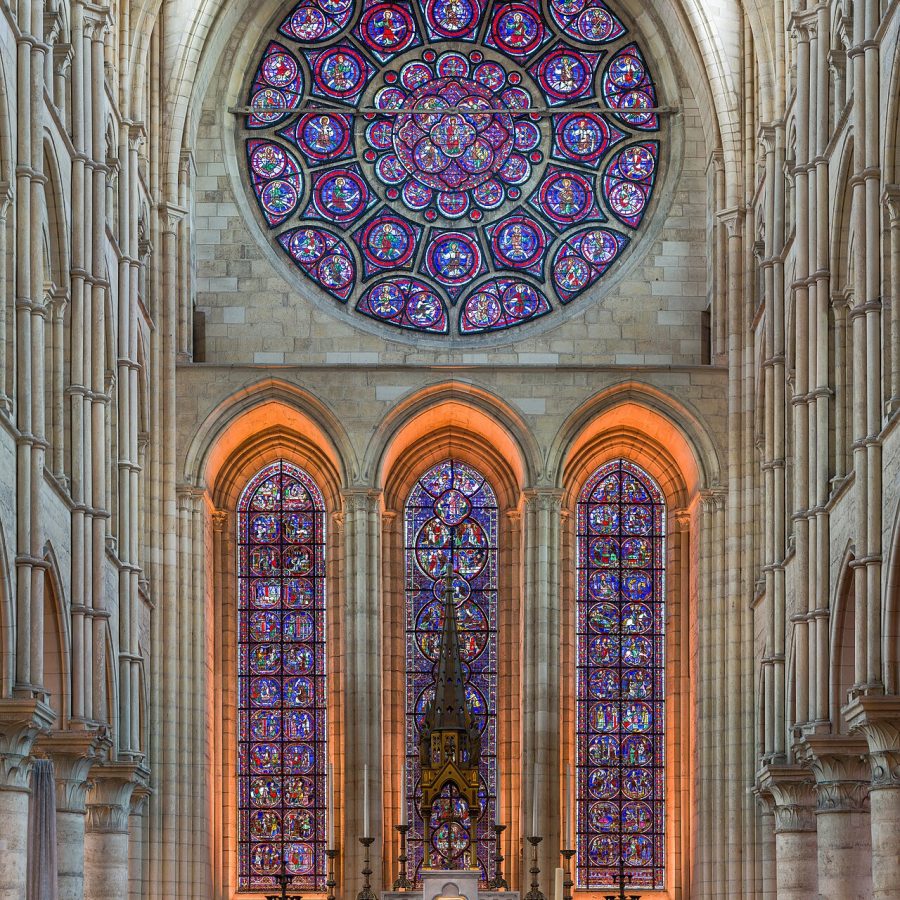
Barnhill Library, reading room · Barnhill
The Ledger Window
For a subscription library reading room: a window built from the shape of its own catalogue, in six greys and one red.
Completed2023
Lights6 lights
Panels36 panels
Glazed area13.7 m²
GlassLamberts — six greys, one ruby
Came9.5 mm H; 6 mm within the rule pattern
Firings12
JobNew window
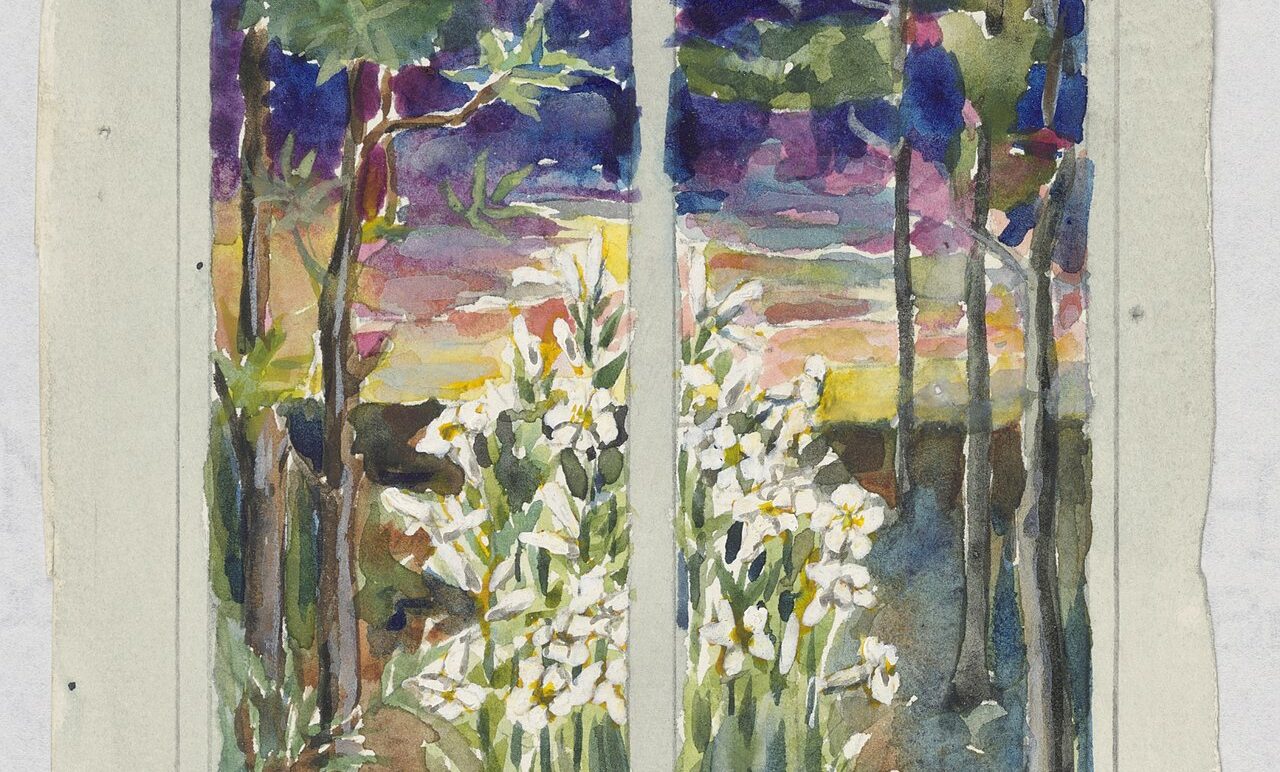
The window
A reading room cannot have a dramatic window in it. People are trying to read. Anything that throws colour across a page is a nuisance, and a coloured pool moving over a desk through the afternoon is worse than a nuisance. So the constraint was set before the design: nothing below forty per cent transmission, and no strong colour anywhere the sun could land on a table.
What the library had instead was a beautiful object nobody thought of as visual — the 1841 accession ledger, ruled in a particular pattern of wide and narrow columns that had been used continuously until 1974. We took that ruling, enlarged it four times, and made it the lead pattern.
Six greys
Grey glass is difficult to buy and difficult to use, because a bad grey is simply dirty. These six are all mouth-blown, all slightly different in what they do to a north light, and arranged so that the difference between any two adjacent quarries is at the edge of what the eye will register. From across the room it looks like a single tone. Standing at the glass, it is obviously six.
The one red
Panel 7, four quarries in from the left, two down. Flashed ruby, acid-etched at the edge so it fades rather than stops. It is the only saturated colour in the entire window and it exists because a window of six greys is a demonstration, not a window. Something has to be alive in it.
Panel by panel
Whole
The lead pattern is the ruled page of the 1841 accession ledger, at four times size.
Panel 7
One ruby quarry. There is exactly one in thirty-six panels and it is not in the middle.
Panel 20
6 mm came, the narrowest we will use. Anything finer will not hold a saddle bar.
Glazing
Reading rooms need even light. Nothing in this window is darker than 40% transmission.
Elsewhere